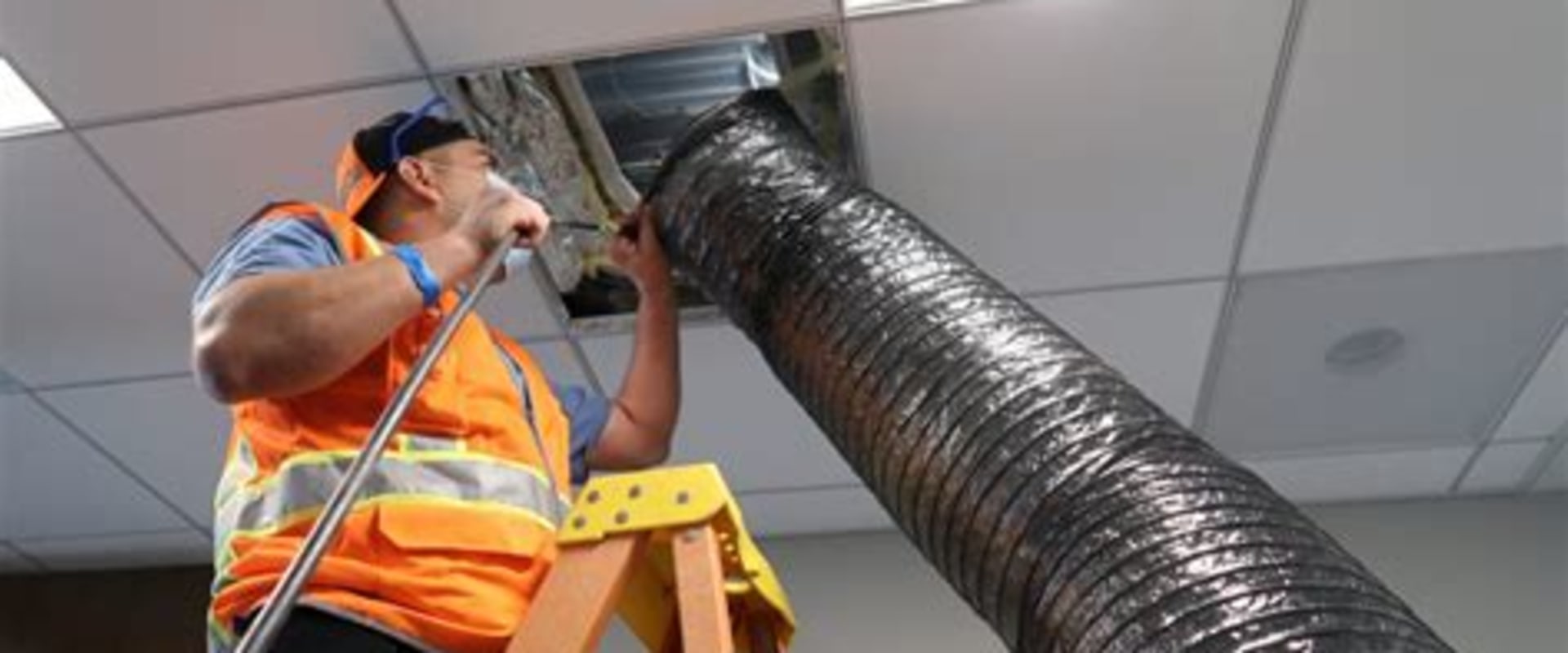
Duct Cleaning Versus Duct Repair: Which Does My Lake Mary Home Need First?
A Lake Mary homeowner called our team last month. Summer bill up a couple hundred dollars, back bedroom five degrees warmer than the hallway, and a vague feeling that something in the attic was off. We climbed up expecting to book an air duct cleaning and found a flex duct lying loose on top of the insulation, fully disconnected from its boot. Cleaning wouldn't have solved any of it. That call is the short version of a question we hear constantly around Lake Mary: should I clean my ducts or repair them first?
Here's how we think about it, after years of walking attics in Heathrow, Timacuan, and Markham Woods. Duct repair fixes the physical problem when ductwork is leaking, disconnected, or damaged. Duct cleaning pulls dust, pollen, and buildup out of ducts that are otherwise intact. Your order of operations depends on what's actually up in your attic, and choosing correctly is how you stop paying twice for the same problem.
The Short Answer
Repair first if the ducts are leaking, separated, crushed, or rodent-damaged. Cleaning a duct system that's losing conditioned air is like mopping the kitchen floor while the faucet runs. Clean first if the ducts are structurally intact and your concern is dust, pet dander, pollen, or a musty odor. A licensed local HVAC pro is the only reliable way to tell which situation is yours.
TL;DR Quick Answers
Repair first if your Lake Mary air ducts are leaking, disconnected, or damaged. Clean first if they're intact and the real complaint is dust, pollen, or odor. Cleaning a leaky duct is like washing a bucket with holes in it, so an inspection should come before either service.
Top Takeaways
Inspect before you authorize any duct service, cleaning or repair.
Repair or sealing goes first when the system is leaking, disconnected, or damaged.
Duct cleaning goes first when the system is intact and air quality is the real concern.
Lake Mary's humidity, attic-mounted ducts, and 1980s-to-2000s build stock put real stress on residential ductwork.
Sealed, intact ducts pay back in lower power bills, steadier indoor humidity, and rooms that finally match your thermostat.
Signs Your Lake Mary Home Needs Duct Repair First
Six signals show up more than any other in Seminole County attics. The first is a summer power bill climbing faster than what your neighbors on the same street are paying. The second is the back bedroom or guest suite that never quite hits the thermostat setting, no matter how long the system runs. Whistling, rattling, or popping from the attic at cycle start is the third tell. Number four is indoor humidity stuck at 60 percent or higher even with the AC running hard. Next is a flex duct you can see from the attic hatch that's crushed, compressed, or fully disconnected after a recent roof, insulation, or pest-control job. Sixth is rodent droppings or chewed insulation near the duct runs. We find that last one far more often than most Lake Mary homeowners would ever expect.
Signs Your Lake Mary Home Needs Duct Cleaning First
Cleaning-first signals look different. Dust plumes puffing from the supply vents in the first minute of a cooling cycle is the clearest one. Indoor allergy flare-ups during oak or pine pollen season, especially for households with a family member who reacts to both, is another common trigger. A musty odor at startup that clears once the system has run for ten minutes points to debris inside the trunk or a return. And a recent renovation, addition, or flooring project that left drywall dust or sawdust in the returns almost always shows up as visibly gray grilles within a few weeks.
Why Lake Mary Ducts Face Their Own Challenges
Central Florida is hard on ductwork, and Lake Mary is no exception. Our humid subtropical climate puts the AC under heavy cooling load from March through October. Afternoon thunderstorms and the occasional tropical system flex attic framing in ways that stress older duct connections over time. Most Lake Mary homes run the air handler and ductwork through an attic that can push past 130 degrees on a typical Florida summer afternoon, well above the conditioned space downstairs and hot enough to age duct materials faster than they would in a cooler attic. A large share of homes in this market were built between the late 1980s and the early 2000s with R-6 flex ductwork that's now at or past its expected service life. Add the oak and pine pollen we all live with, and the typical Lake Mary duct system works harder and ages faster than what we'd see in a cooler, drier market.
A Simple Decision Framework
We walk every Lake Mary homeowner through five steps in this order.
Schedule a duct inspection from a licensed local HVAC professional before you authorize any work.
Ask the technician to visually inspect every accessible run and pressure-test the system where possible.
If physical damage or meaningful leakage shows up, authorize repair or sealing first.
Once the system is sealed and intact, add a cleaning of your ductwork if dust or air quality concerns are still present.
Follow up with a filter upgrade and a maintenance schedule built around our local pollen calendar.
What Air Duct Repair in Lake Mary Actually Looks Like
Air Duct Repair in Lake Mary starts with a full-system inspection, followed by a diagnostic pass that locates leaks, disconnections, crushed sections, and insulation damage. The fix matches what the inspection turns up. Small leaks at joints and boot connections get sealed with mastic. Disconnected or crushed flex runs get replaced outright. For whole-system leakage spread across dozens of small holes that would take days to find one by one, our team uses Aeroseal, a non-toxic aerosol sealant that pressurizes the duct system and closes leaks from the inside.
While sealing leaks is vital, homeowners should also consider the importance of proper HVAC maintenance to prevent future debris buildup. Every job wraps with a verification check so the homeowner sees, on paper, that the system is delivering the air it's supposed to deliver.
What Homeowners Usually Pay and What They Get Back
The honest answer on cost is that Lake Mary duct repair pricing depends on how much of the system needs work. Anyone who quotes a flat number sight-unseen should be viewed carefully. What we'll commit to is the return side. In a typical Central Florida home, duct leakage wastes a meaningful share of the conditioned air your AC produces, and that waste shows up directly on your summer power bill.
If your unit is struggling even after repairs, it may be time to evaluate what age you should replace an HVAC system to ensure maximum efficiency. Once the ducts are airtight, the back bedroom tends to hold temperature again, and indoor humidity drops toward the 30 to 50 percent range the EPA recommends. To maintain this improved air quality, we suggest using high-efficiency MERV 13 furnace filters or a similar pleated HVAC replacement filter to capture fine particles and keep your newly repaired system running clean.

"We see the same story every month in Lake Mary attics. A homeowner pays for a duct cleaning, calls us back a month later, and the power bill is still climbing. The ducts were leaking the whole time. Cleaning a leaky duct is like washing a bucket with holes in it. Inspect first, repair what's broken, then clean what's left. That order has saved our neighbors thousands over the years."
7 Essential Resources
Every source below comes from a .gov, .org, or .edu domain. Each covers a different piece of what you're deciding on, and no two share a source domain.
U.S. Environmental Protection Agency: Should You Have the Air Ducts in Your Home Cleaned?
https://www.epa.gov/indoor-air-quality-iaq/should-you-have-air-ducts-your-home-cleaned
The EPA's consumer guide on when duct cleaning is actually warranted. It names three conditions under which cleaning is worth doing: visible mold growth inside the ducts or on other HVAC components, a verified rodent or insect infestation, and dust and debris heavy enough to release particles into the home. The page also notes that routine duct cleaning has not been shown to prevent health problems in the absence of those triggers, and that chemical biocides or sealants applied during cleaning have not been proven effective or safe for insulated ducts. Essential reading before you say yes to a cleaning.
ENERGY STAR: Duct Sealing
https://www.energystar.gov/saveathome/heating-cooling/duct-sealing
The federal program's homeowner-facing resource on duct sealing. Home to the widely cited figure that 20 to 30 percent of the air in a typical duct system is lost to leaks, holes, and poor connections. The page lists the performance symptoms that usually point to a leaking duct (high summer and winter bills, hot and cold rooms, stuffy air, tangled flex runs) and walks through the DIY-versus-pro decision, including why ordinary cloth-backed duct tape is not a durable sealant. A downloadable ENERGY STAR Duct Sealing Fact Sheet is linked at the bottom.
U.S. Department of Energy: Minimizing Energy Losses in Ducts
https://www.energy.gov/energysaver/minimizing-energy-losses-ducts
The Department of Energy's Energy Saver guide to residential duct systems. Useful for understanding why placing ducts inside the conditioned space is the gold standard, why the return side is the most commonly overlooked part of a duct system, and how simple fixes like undercutting doors or adding a jumper duct can solve imbalanced airflow. The page is blunt about sealing materials: mastic outperforms tape, and cloth-backed rubber duct tape should not be used. A good source for homeowners who want to understand the reasoning behind a contractor's recommendation.
American Lung Association: Clean Air at Home
https://www.lung.org/clean-air/indoor-air
The American Lung Association's homeowner-facing indoor air quality hub. Worth reading first for the core framing: Americans spend roughly 90 percent of their time indoors, and indoor pollutant levels often run 2 to 5 times the levels outside. The page covers dust, mold, pet dander, pollen, radon, and volatile organic compounds, with a 10-step action list homeowners can apply without hiring anyone. The Lung Association specifically recommends a furnace filter rated MERV-13 or higher for households with allergies or lung conditions.
University of Florida IFAS Extension: Duct Systems in Energy Efficient Homes
https://edis.ifas.ufl.edu/publication/FY1024
A Florida-specific research publication from the University of Florida IFAS Extension, and the only guide on this list written with our climate in mind. It's the source of the 25-to-40-percent energy-loss figure for typical residential duct systems and the recommendation that ductwork be inspected at least once a year. The publication also includes a plain-language glossary (supply, return, air handler, cooling load, conditioned air) that we find ourselves pointing homeowners to all the time during inspections.
U.S. Centers for Disease Control and Prevention: About Mold
https://www.cdc.gov/mold-health/about/index.html The CDC's homeowner reference on preventing and handling mold, and a critical read for anyone weighing a duct decision in a humid climate. The page confirms that mold can enter a home through open vents and HVAC systems, recommends keeping indoor humidity no higher than 50 percent, and walks through cleanup procedures for small mold areas. CDC specifically does not recommend mold testing for most residential situations. They advise treating visible mold promptly and fixing the underlying moisture problem instead.
U.S. Energy Information Administration: Use of Energy in Homes
https://www.eia.gov/energyexplained/use-of-energy/homes.php
Federal household energy data from the U.S. Energy Information Administration. Home to the statistic that 52 percent of a typical U.S. household's annual energy use goes to just two end uses, space heating and air conditioning, and the baseline for understanding the payback of duct repair. The page also shows regional variation, which matters in Florida because households in our climate spend a far larger share of their energy on cooling than the national average. A useful reference for sizing up what any percentage of duct leakage is actually costing your family.
Statistics That Explain Why Order Matters
Each stat below comes from a different authoritative source.
20 to 30 percent. In a typical home, 20 to 30 percent of the air moving through the duct system gets lost to leaks, holes, and poorly connected ducts, according to ENERGY STAR.
Source: https://www.energystar.gov/saveathome/heating-cooling/duct-sealing
25 to 40 percent. Research published by the University of Florida IFAS Extension reports that typical air-duct systems lose 25 to 40 percent of the heating or cooling energy the HVAC system puts out.
Source: https://edis.ifas.ufl.edu/publication/FY1024
52 percent. More than half of a U.S. household's annual energy use (52 percent in 2020) goes to just two end uses: space heating and air conditioning, according to the U.S. Energy Information Administration.
Source: https://www.eia.gov/energyexplained/use-of-energy/homes.php
Three numbers, one conclusion. Heating and cooling is the biggest chunk of your energy use, and a serious share of it is leaking out of the ducts before it ever reaches you. Fixing the order of operations keeps more of that paid-for air where it belongs.
Final Thoughts and Opinion
If this were our own Lake Mary home, here's what we'd do. Start with an honest inspection instead of a cleaning quote or a repair quote. Have a technician walk the attic with you, look at every accessible run, and tell you straight what they find. If the inspection shows leakage or damage, fix that before spending a dollar on cleaning. If the system comes back sealed and intact and the real issue is allergies or a musty odor, clean then. Either way, upgrade the return filter afterward and put the system on a maintenance schedule built around Central Florida's humidity and pollen calendar. Getting the order right is the line between solving the problem once and paying twice to solve it.
Frequently Asked Questions
Should I clean my air ducts or repair them first?
Repair first if the system is leaking, disconnected, or physically damaged. Clean first if the ducts are structurally intact and your real concern is dust, pollen, pet dander, or mold on accessible surfaces. A licensed local inspection is how you tell which situation is yours.
How do I know if my ducts are leaking?
Watch for climbing summer power bills, rooms that never hit the thermostat, whistling or rattling from the attic, indoor humidity stuck above 60 percent with the AC running, and visible disconnections or crushes in accessible duct runs. A professional pressure test removes the guesswork.
How much does air duct repair cost in Lake Mary, FL?
It depends on how much of the system needs work, so we won't quote a flat number sight-unseen. A small sealing job at a handful of joints costs far less than replacing multiple flex runs or adding whole-system sealing. What we'll commit to is an honest on-site look before any pricing conversation.
Does duct cleaning improve indoor air quality in Central Florida?
It can, when the ducts actually hold contaminants that are reaching the living space. The EPA is clear that cleaning is warranted when there's visible mold inside the ducts, a rodent or insect infestation, or dust buildup heavy enough to release particles into the home. Routine cleaning of an otherwise healthy, sealed duct system shows less clear benefit.
What causes duct damage in Lake Mary homes?
Attic heat, humidity, rodent activity, compressed flex runs from insulation or roof work, and plain old age. A large share of Lake Mary homes were built from the late 1980s through early 2000s with R-6 flex duct that's now at the end of its service life.
How often should my ducts be inspected in Florida?
At least once a year, ideally before summer cooling season starts. The University of Florida IFAS Extension recommends annual inspections specifically because of how hard Florida HVAC systems have to work.
Can you clean and repair ducts on the same visit?
Yes, when the scope allows. Our Lake Mary team often seals small leaks during a cleaning visit. Bigger repairs or full replacements usually justify a second visit so the cleaning happens in a fully sealed duct system.
Schedule Your Lake Mary Duct Inspection
If you're in Lake Mary, Heathrow, Timacuan, Markham Woods, or anywhere else in Seminole County and you're weighing a duct service decision, start with an inspection you can trust. We live and work in this community too. Our team will walk your attic with you, show you what we find, and give you an honest read on whether repair, cleaning, or both should come first. No pressure, just a straight answer from a neighbor who does this every day.
Learn more about HVAC Care from one of our HVAC solutions branches…
Filterbuy HVAC Solutions - Miami FL - Air Conditioning Service
1300 S Miami Ave Apt 4806 Miami FL 33130
(305) 306-5027
https://maps.app.goo.gl/Ci1vrL596LhvXKU79